
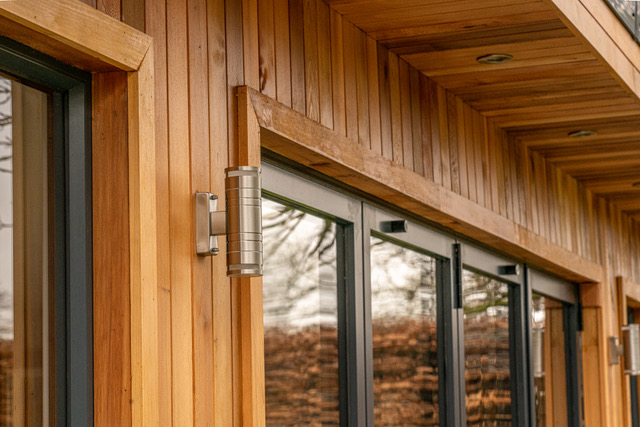
Choosing The Correct Cladding
When selecting cladding for your garden room, several factors come into play, including all important look, durability and maintenance. Cladding not only enhances the visual appeal of your space but also acts as a protective layer against the elements. Two of the most popular, modern choices for cladding are composite materials and natural wood, each offering unique benefits.
Here’s a comprehensive look at the considerations to keep in mind when choosing cladding and why you might opt for composite or natural wood.
Aesthetics
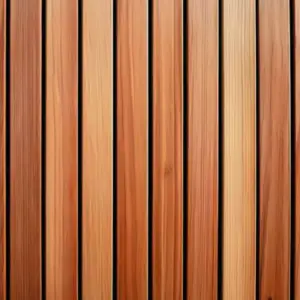
Natural Wood: Many people are drawn to the warmth and beauty of natural wood. Wood offers a classic look that can blend seamlessly with garden surroundings. With several timber cladding types available, it’s often down to preference. Red cedar cladding looks great due to its beautiful, warm reddish-brown tones, attractive grain, and provides a contemporary look. Many other timber options are available, such as Siberian Larch. This will provide a more traditional look and the presence of knots and other natural features can add to its rustic charm, making it suitable for both modern and traditional designs.
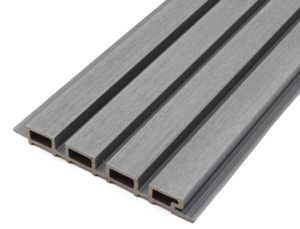
Composite Materials: Composite cladding offers a modern, contemporary look with the popular advantage of being a very low-maintenance alternative to traditional timber cladding. Made from a mix of wood fibres and quality plastic, composites are available in a variety of colours, finishes and styles. Wood grain effects offer the part appearance of wood, yet with a more uniform look. Other popular surface finishes are available, such as smooth sanded textured boards. Alternatively, slatted cladding and can provide a sleek modern finish.
Durability
Natural Wood: While aesthetically pleasing and a great look, natural wood can be susceptible to rot, insect damage, and weathering over time. Choosing high-quality timber and treating it with protective finishes can prolong its lifespan, but it still requires regular maintenance to prevent deterioration.
Composite Materials: Composite cladding has exceptional durability and is designed to withstand varied and often harsh weather conditions. Unlike natural wood it doesn’t warp or crack like natural wood and is engineered for durability and highly resistant to moisture, rot, and pests. Many composite products come with warranties, offering peace of mind regarding their longevity.
Maintenance
Natural Wood: Maintenance is an important consideration for natural wood. Regular staining, sealing, or painting is necessary to protect it from the elements and maintain its appearance. This can time-consuming and costly. However, using quality timber products and correct installation can influence the amount of maintenance required.
Composite Materials: One of the main advantages of composite cladding is its low maintenance requirement, making it an excellent choice. It typically only requires occasional cleaning with soap and water to remove dirt and debris. This ease of maintenance can save you time and effort in the long run. The durability of composite cladding means that repairs are rare.
Costs
Natural Wood: The cost of natural wood can vary greatly based on the type and quality of the wood. While some species are more affordable, premium woods can be quite expensive. Additionally, consider the long-term costs associated with maintenance.
Composite Materials: While the initial upfront cost of composite cladding may be higher than some wood options, its durability, life span and low maintenance can make it more cost-effective over time. When making the decision between composite or natural wood, it’s long life-span and very low maintenance can make it a wise investment.
Installation
Natural Wood: Installing natural wood cladding is typically achieved using more traditional methods. However, it requires specific tools and techniques to ensure a proper fit and finish. Considerations include allowing wood to climatise, creating an air gap, using appropriate fasteners as well as allowing for movement.
Composite Materials: Installing composite cladding is likely to have some differences specific to each manufacturer. It may require different techniques but will certainly require specialized tools, depending on the product. Some composite materials are designed for ease of installation, featuring interlocking systems, fitted trims and other specific finishings. Although, designed for ease of installation it is vital to fit professionally to a high standard.
Conclusion
Choosing the correct cladding for your garden room is a significant decision. This will impact the look, durability, and any future maintenance required . Natural wood offers a natural look and warmth but requires more upkeep, while composite materials provide durability and low maintenance with a modern look.
Considering your priorities, budget, and long-term plans will help guide your choice. Ultimately, both materials can create a stunning garden room that enhances your outdoor experience. Would you like more details on specific types of wood or composite materials?
